
Why We Only Install Aiko ABC Panels — and What Every Solar Buyer Should Know First
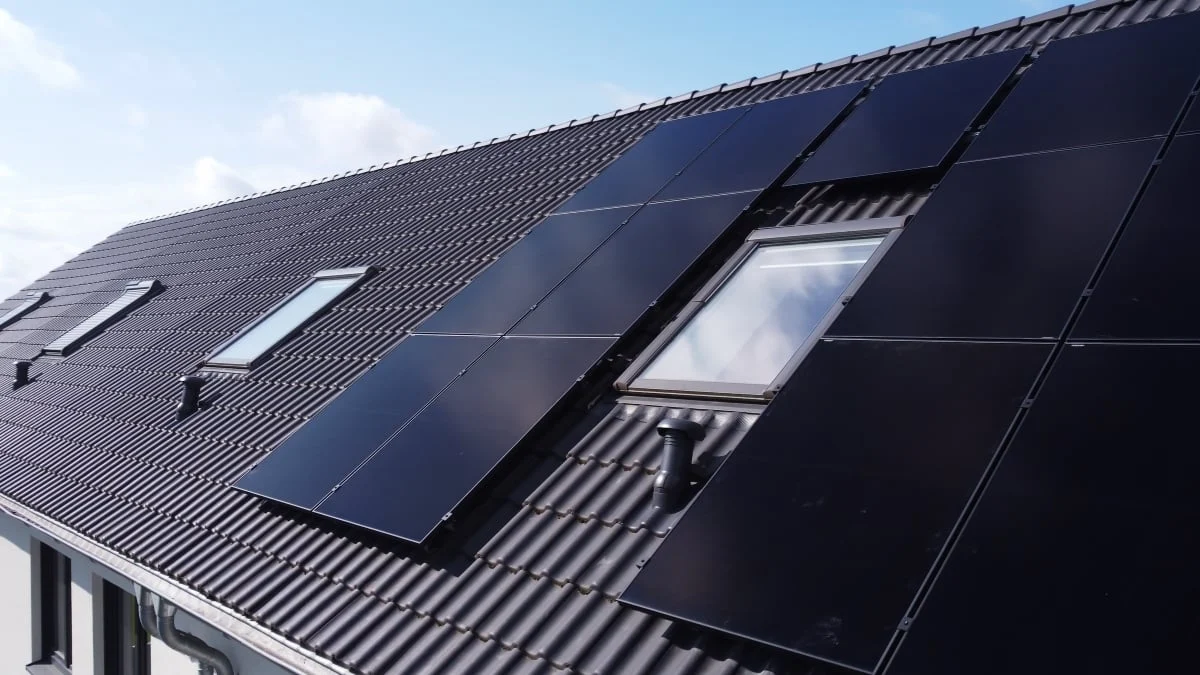
Most homeowners go into a solar purchase focused on price and brand name. That's understandable. But there's a detail that matters more than either, one that determines how much electricity your roof actually produces over the next 25 years, and most installers won't explain it unless you ask.
It's the type of solar cell inside the panel. Before we explain why we love Aiko's technology, there's something you should watch out for.
A word of warning: not all panels are equal
Before you sign
Always ask your installer whether they are using N-type or P-type panels. If the answer is P-type, it's worth pushing back.
P-type panels, the older, cheaper technology still sold by many installers today, lose 1 to 3% of their power output in the very first year, before any other degradation even begins. In Singapore's intense sun, that drop happens fast. Over 25 years, a P-type panel will produce noticeably less electricity than an N-type panel of the same rated size.
N-type panels don't have this problem. They produce close to their rated output from day one, handle Singapore's heat better, and degrade more slowly over time. For a landed home where roof space is limited, N-type is the minimum you should accept.
Now, with that baseline established, here's why we go a step further with Aiko.
What makes Aiko ABC panels different
Aiko's ABC panels are N-type at their core, so they already have all the advantages above. But Aiko has solved a problem that every other panel manufacturer still lives with: the metal lines on the front of the cell.
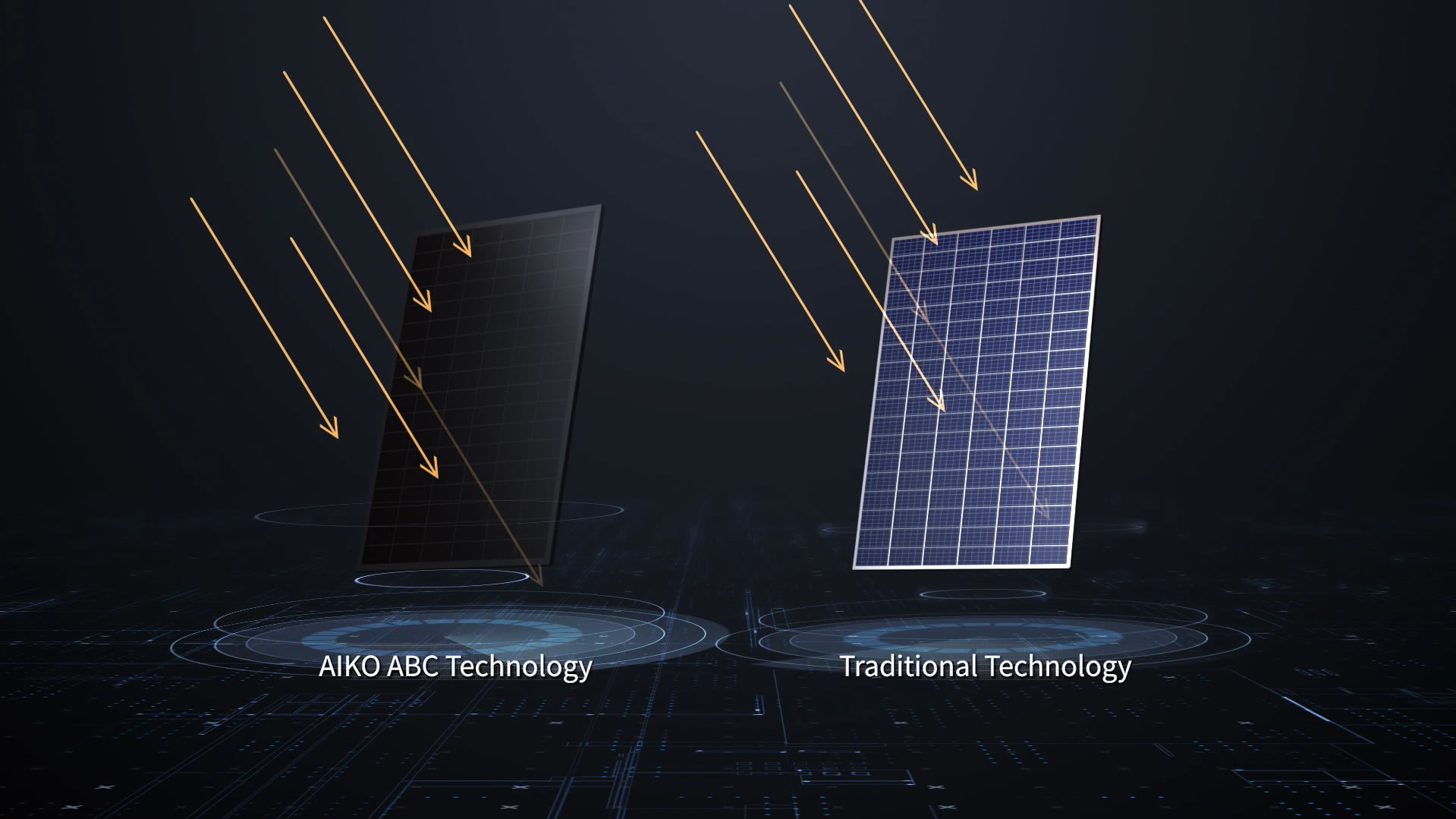
On a standard solar panel, you'll notice fine lines running across the surface. These are contacts that carry electricity out of the cell. They're necessary, but they block a portion of sunlight before it even reaches the silicon, a bit like putting tape across a window. You're losing light you don't need to lose.
Aiko's solution, All Back Contact, or ABC, moves every electrical connection to the back of the cell. The front face is completely clear. Every part of the panel absorbs sunlight, nothing is blocked.
The practical benefits for your home
More output from the same roof space
With no front-side contacts blocking sunlight, Aiko panels squeeze more electricity out of every square metre. On a Singapore landed home where roof space is finite, that matters.
Better performance in the shade
Singapore rooftops are rarely perfectly shadow-free. A neighbour's tree, a parapet wall, a water tank. Aiko's back-contact design lets electricity route around shaded areas, producing up to 30% more energy than standard panels under partial shading.
Stays stronger in the afternoon heat
All solar panels lose some efficiency as they heat up. Aiko ABC panels have one of the lowest heat performance losses in the industry, holding their output better during Singapore's hottest hours.
Holds its performance for longer
Aiko backs its panels with a 30-year performance warranty, guaranteeing over 90% of original output at the three-decade mark. Most standard panels warrant only 80 to 84% at 25 years.
Looks significantly better on your roof
With no visible contact lines, Aiko panels have a clean, all-black finish with no grid lines across the surface. For homeowners who care how their property looks, this is a meaningful difference.
Is the extra cost worth it?
Aiko ABC panels cost a little more than standard N-type panels. For a typical landed home system, that difference is a few thousand dollars on the total installation price.
But consider what you're buying: more electricity every day for 30 years, better performance through Singapore's heat and shade, and a panel that looks genuinely premium on your home. Over the life of the system, the additional output typically covers the cost difference, and then some.
"The cheapest panel is not always the most cost-effective one. The most cost-effective panel is the one that generates the most electricity over its lifetime, reliably, and without surprises."
That's why we specify Aiko ABC for every Lion City Solar installation, and why, if you're getting quotes elsewhere, N-type is the baseline question worth asking before anything else.
Ready to get your own solar system?
Want a system built around Aiko ABC panels and engineered for your specific roof? Book a free site survey and we'll model the numbers for your home.
Get a free site survey