
Do Solar Panels Need Cleaning in Singapore? Rain, Bird Droppings, and Everything Else
When Singapore homeowners ask us about solar panel maintenance, the same questions come up every time.
"Won't the rain just clean them?"
"What about bird droppings? We get a lot of mynahs and pigeons."
"Do I actually need to do anything, or can I just leave them?"
These are genuinely good questions, and the honest answers are more nuanced than most installers will tell you. So here is a complete, no-fluff breakdown of what Singapore's climate does to your panels, what you need to watch for, and what you can safely ignore.
The Good News: Singapore's Rain Is Your Best Friend
Let's start with the reassuring part. Singapore receives an average of 2,166mm of rainfall per year, and that rainfall does a remarkably good job of keeping solar panels clean.
Dust, pollen, and general atmospheric debris, the things that accumulate on panels in drier countries, are regularly rinsed away here before they build up enough to matter. In a typical year, a well-installed rooftop system in Singapore will lose less than 2 to 3% of its output to surface soiling.
Compare that to systems in Australia or the Middle East, where soiling losses of 10 to 25% are common without regular cleaning. Singapore's tropical climate is genuinely one of the best in the world for low-maintenance solar.
The practical implication: you do not need a scheduled quarterly cleaning programme. For most homes, the rain does enough.
The Bad News: Rain Cannot Remove Bird Droppings
Here is where homeowners get caught out.
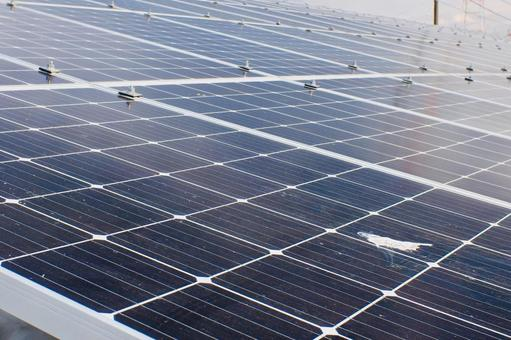
While rain can rinse away light dust, it is largely ineffective against the stubborn, adhesive nature of bird droppings. Bird guano contains digestive fluids that bake onto the panel's glass surface and cannot be easily cleansed, even with heavy downpours.
This matters more than most people realise. Research has found that soiling from bird droppings can reduce a panel's output power by as much as 23.8%. In a controlled experiment, a panel with just four bird droppings produced between 12% and 33% less power compared to an identical clean panel.
The mechanism behind this is called hotspotting. When a dropping blocks light from reaching even a small section of a panel, that section stops generating power and instead begins absorbing it as heat. For every single degree Celsius a panel's temperature rises, its power yield can drop between 0.2% and 0.5%. A panel running 25 degrees Celsius hotter due to hotspots could lose an additional 5% to 12.5% of its output from heat alone.
Left unchecked, hotspots also cause long-term damage. The acidic nature of bird droppings gradually corrodes protective coatings on panels, leading to decreased efficiency over time. If not promptly removed, hardened droppings can require abrasive cleaning methods that damage the panel surface and shorten its lifespan.
In Singapore, the main culprits are mynahs, pigeons, and crows. Homes near parks, large trees, or waterways are more exposed. If you can hear birds regularly perching on or around your roof, your panels need more attention than the average home.
What About Humidity, Salt Air, and UV?
Singapore's other environmental factors are worth addressing directly.
Humidity: High ambient humidity does not directly harm well-made panels. What humidity can do is accelerate corrosion on cheap mounting hardware and connectors. This is precisely why material specification matters. Anodised aluminium rails and stainless steel SUS304 fasteners are not marketing language, they are genuine requirements for Singapore's climate.
Salt Air: Homes near the coast face salt spray, which can leave residue on panels and accelerate corrosion of frames and fasteners. These homes benefit from a rinse with fresh water once or twice a year even if the panels look clean.
UV Degradation: Singapore sits just 1.3 degrees north of the equator, meaning intense UV exposure year-round. Quality Tier-1 panels are tested and rated for this. Cheaper panels with lower-grade encapsulant materials will degrade faster under Singapore's UV load.
Tree Debris: If you have large trees near your roofline, leaves, seed pods, and sap can land on panels and be more stubborn than dust. Sap in particular can be difficult to remove and will block light just as effectively as a dropping.
How to Actually Know If Your Panels Need Cleaning
The best tool you already have: your monitoring app.
Both the Huawei FusionSolar app and the Sungrow iSolarCloud app show your daily generation figures in real time. If you notice output dropping on clear, sunny days, not during overcast periods, that is your signal to visually check the panels. A 10 to 15% unexplained drop in generation on a clear day typically points to a soiling issue.
What to look for during a visual check:
- White or grey streaks (dried bird droppings)
- Dark patches or staining
- Accumulated leaves or debris around panel edges
- Any physical damage to the glass surface
You do not need to get on the roof to see most of this. Binoculars from ground level will do for a quick check.
How to Clean Them Safely
If you do need to clean:
What works:
- A gentle rinse with a garden hose on a low-pressure setting, sufficient for general dust and light soiling
- For dried droppings, soak the area with water first to soften it, then use a soft-bristled brush or sponge with a mild, pH-neutral soap solution
- Clean in the early morning or on an overcast day to avoid thermal shock from cold water hitting hot panels
What to avoid:
- High-pressure washers, as these can damage the panel surface
- Abrasive materials, steel wool, or harsh chemicals, as these scratch the anti-reflective coating and permanently reduce output
- Cleaning from an unsecured position on the roof. Always prioritise safety.
Our recommendation for most homeowners: if the panels are accessible from the ground with a long-handled brush and hose, a self-clean once or twice a year is entirely manageable. If your roof requires ladder access or scaffolding, engage a professional. The cost is far less than the risk of a roof fall or accidental panel damage.
How Often Should You Check?
Here is a simple rule of thumb for Singapore homes:
| Situation | Recommended Check Frequency |
|---|---|
| No nearby trees, low bird activity | Every 6 to 12 months visual check |
| Occasional birds, some tree coverage | Every 3 to 6 months |
| Near parks, waterways, heavy bird activity | Monthly visual check |
| Coastal or near industrial areas | Rinse with fresh water every 3 to 6 months |
In all cases, let your monitoring app guide you. A dip in generation is a more reliable signal than a fixed calendar schedule.
The Bottom Line
Singapore's climate makes solar maintenance genuinely low-effort compared to almost anywhere else in the world. The rain handles the routine cleaning. Your monitoring app tells you when something is wrong. And the main thing to actually watch for, the thing the rain will not fix, is bird droppings.
Check your output monthly. Do a visual inspection every quarter. Clean when the data tells you to, not on a rigid schedule. And if you are near a park, a coastline, or a large tree canopy, give your panels a little more attention than the average home needs.
That is genuinely all the maintenance a well-installed system in Singapore requires.
Have questions about your system's performance? Lion City Solar provides ongoing support for every system we install. Reach us at hello@lioncitysolar.sg or visit lioncitysolar.com.
Ready to get your own solar system?
Want ongoing support for your solar system? Every Lion City Solar installation comes with monitoring guidance and aftercare. Book a free site survey to learn more.
Get a free site survey